
Disclosure: This post may contain affiliate links. I may earn a small commission for my endorsement, recommendation, testimonial, and/or link to any products or services from this website.
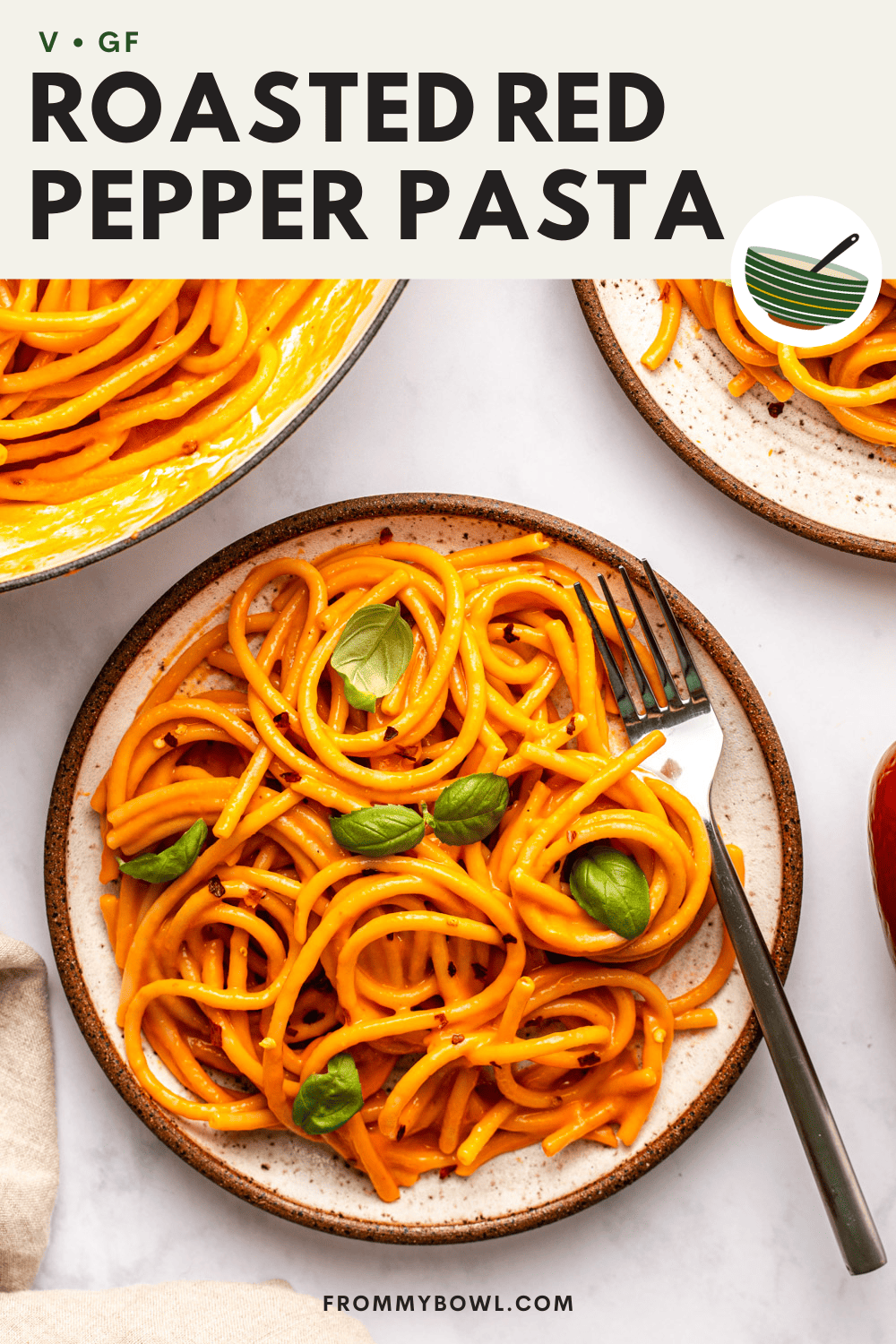
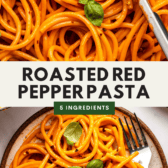
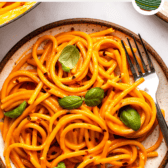
This Roasted Red Pepper Pasta tosses al dente pasta in a luxurious homemade roasted red pepper sauce to leave you with a simple dinner that’s perfectly tangy, creamy, and rich! Vegan and Oil-Free, Gluten-Free Option.
Keep dinner simple and delicious tonight with this Creamy Roasted Red Pepper Pasta, a 20-minute meal made entirely from scratch! The blended vegan red pepper sauce is easy to make with 7 wholesome ingredients and has rich and tangy flavors the whole family will love. Just toss it with your choice of pasta, top with fresh herbs and red pepper flakes, and enjoy.
Table of Contents
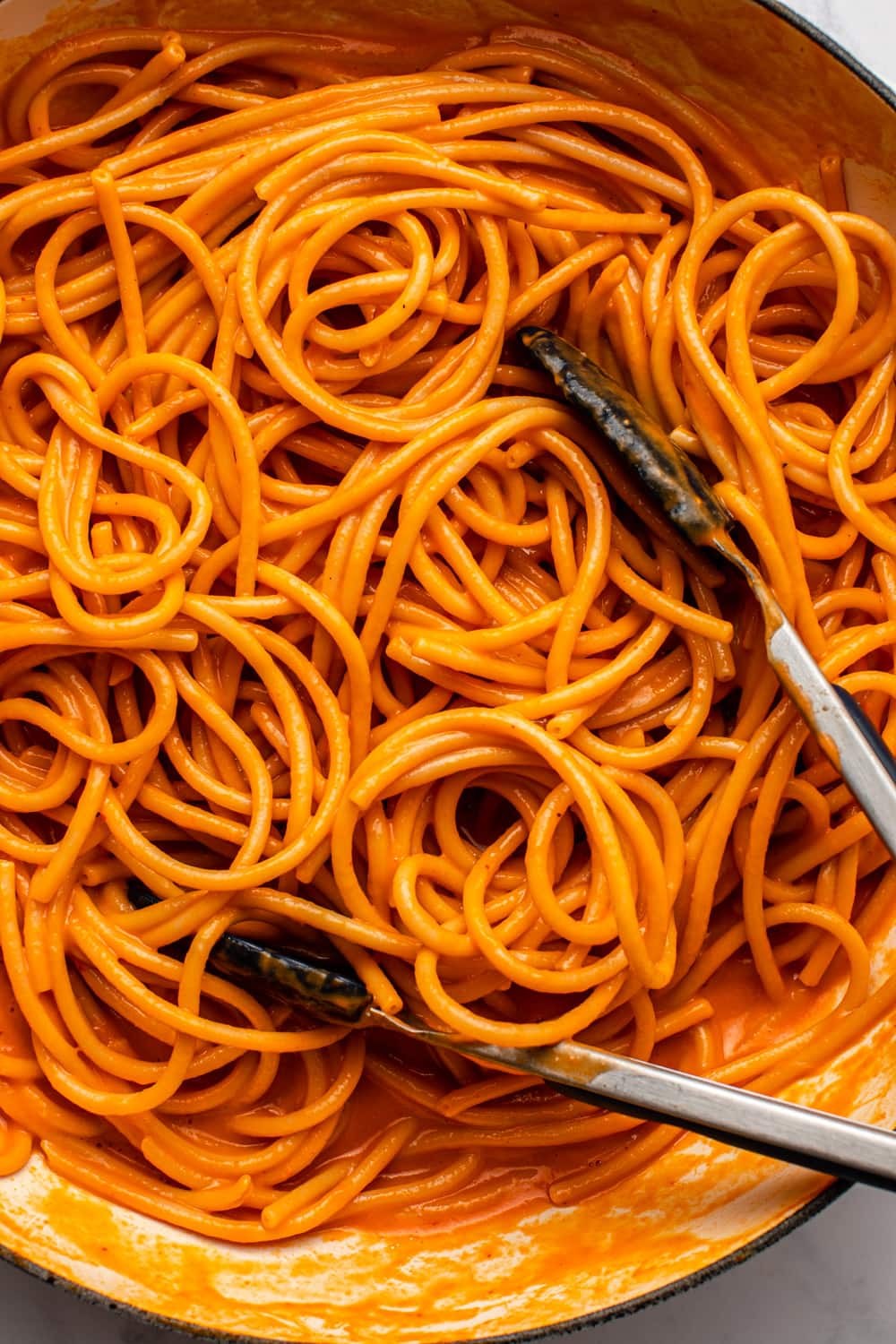
Your New Favorite Tomato-Free Pasta Sauce
Need a change from your usual alfredo sauce or vodka sauce? Allow me to introduce you to your new favorite pasta sauce: roasted pepper pasta sauce! It’s a tangy, smooth, and tomato-free sauce with a wonderful depth of flavor.
I know change can be scary, but all it takes is one bite of this Vegan Roasted Red Pepper Pasta to make you a convert. There’s so much to love about this dish! The 7-ingredient blended sauce has a rich and creamy consistency you would normally only dream of; my Homemade Roasted Red Peppers are the star, thus making the tomato-free sauce less acidic; and the whole thing comes together in less than 20 minutes. What more could you ask for in a simple weeknight dinner?
Ingredients for Vegan Red Pepper Pasta
All you need are 7 basic ingredients to make the red pepper sauce, plus any type of pasta you like to tie the meal together.
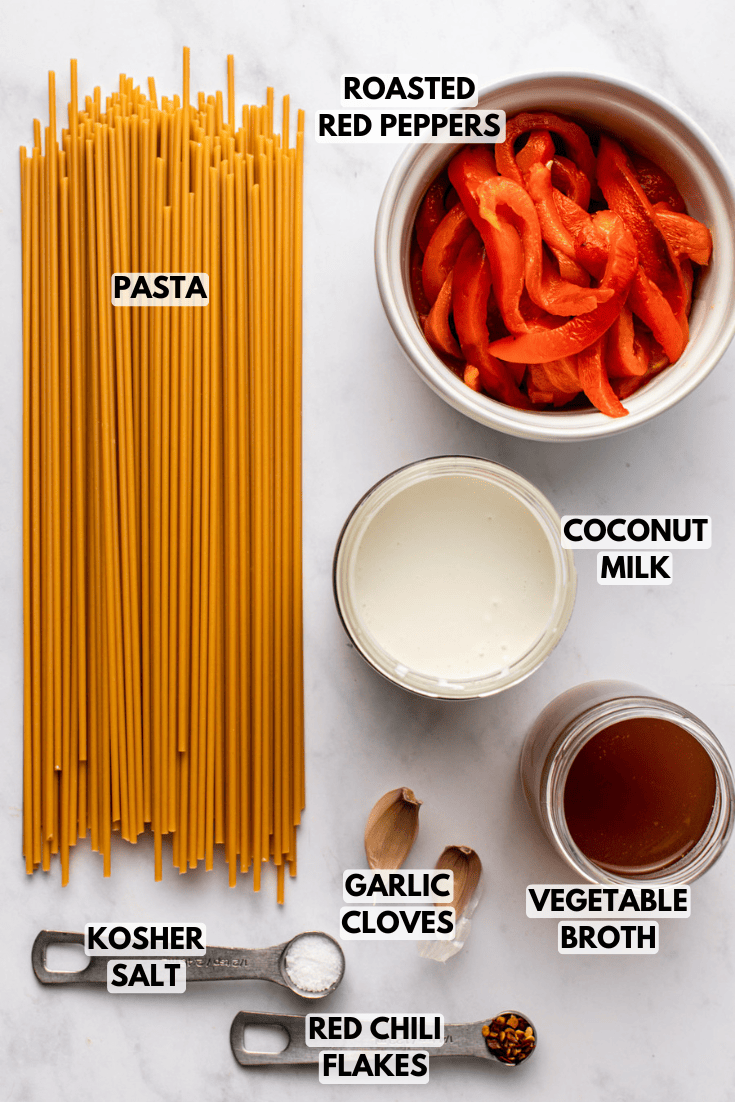
- Roasted Red Peppers: not raw red bell peppers—ROASTED red bell peppers are the key to giving the pasta sauce its characteristic tangy flavors and eye-catching red-orange color. A 12-ounce jar or can of store-bought peppers is a really convenient option, but I can’t resist roasting the peppers myself when I have a bunch on hand.
- Coconut Milk: it’s what makes this vegan pasta sauce super rich and creamy. Use full-fat canned coconut milk, not coconut milk from a carton.
- Broth: store-bought or homemade vegetable broth rounds out the flavors in the pasta sauce. I used a full-sodium vegetable broth, but low-sodium will work if you’re watching your sodium intake.
- Cornstarch: it thickens the pasta sauce. Feel free to use arrowroot powder as a substitute if you’d prefer.
- Herbs and Spices: a pinch of salt balances the sauce and red chili flakes bring a subtle but complimentary heat.
- Pasta: I like spaghetti but any long or short-cut pasta shape will work just fine.
How to Make Roasted Red Pepper Pasta
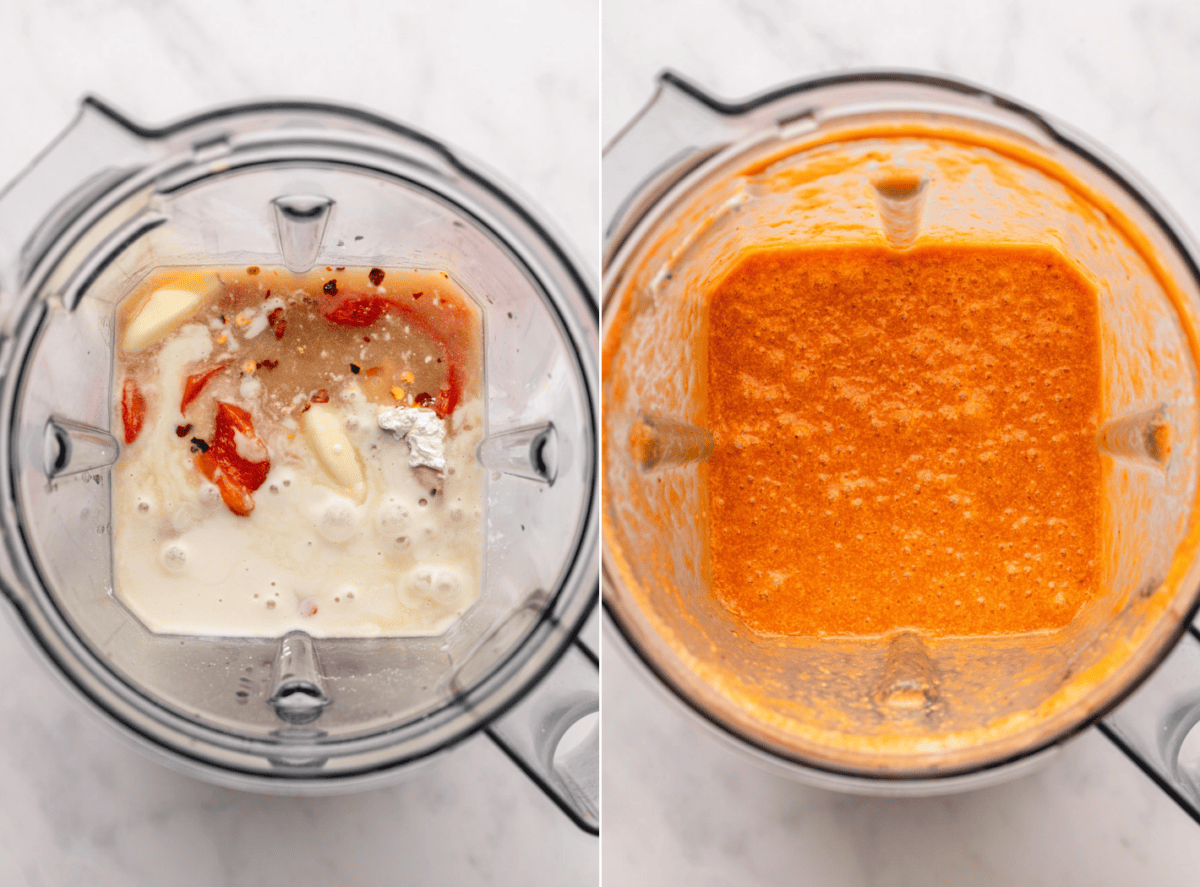
- Cook the pasta noodles to al dente according to the package directions. Drain, then set aside.
- Add the red pepper sauce ingredients to a blender and blend until the sauce is smooth and creamy.
- Simmer the sauce in a large pot over medium heat. Once it’s thickened, add the cooked pasta and toss it with the sauce. Taste and adjust the seasonings as needed.
- Serve the warm pasta in bowls and garnish with fresh basil and more chili flakes.
Caitlin’s Cooking Tips
- You can roast the red peppers yourself: If you have a bunch of red bell peppers on hand, then you have the perfect excuse to make your own roasted red peppers. Learn how it’s done in my recipe for Homemade Roasted Red Peppers—it’s a one-ingredient, 35-minute process!
- Rinse and drain the roasted red peppers: Draining any water or oil from the jar or can of store-bought roasted peppers and rinsing them under water will prevent their bold flavors from being toned down in the sauce.
- Tips for thickening the pasta sauce: You can avoid having a bunch of watery pasta sauce left in the bottom of your pot by (1) NOT rinsing the pasta after it’s done cooking (the leftover starch on the outside is a natural thickener), (2) simmering the sauce for 5 to 7 minutes to help activate the cornstarch, and (3) letting the sauce-coated pasta sit and absorb the sauce for 5 minutes before serving.
- For the perfect pasta-to-sauce ratio: This pasta recipe was developed using 8 ounces of dried pasta (about 1/2 a package of a standard-size package of pasta). If you want to cook the full package of pasta, double the creamy sauce to keep things saucy!.
Serving Suggestions
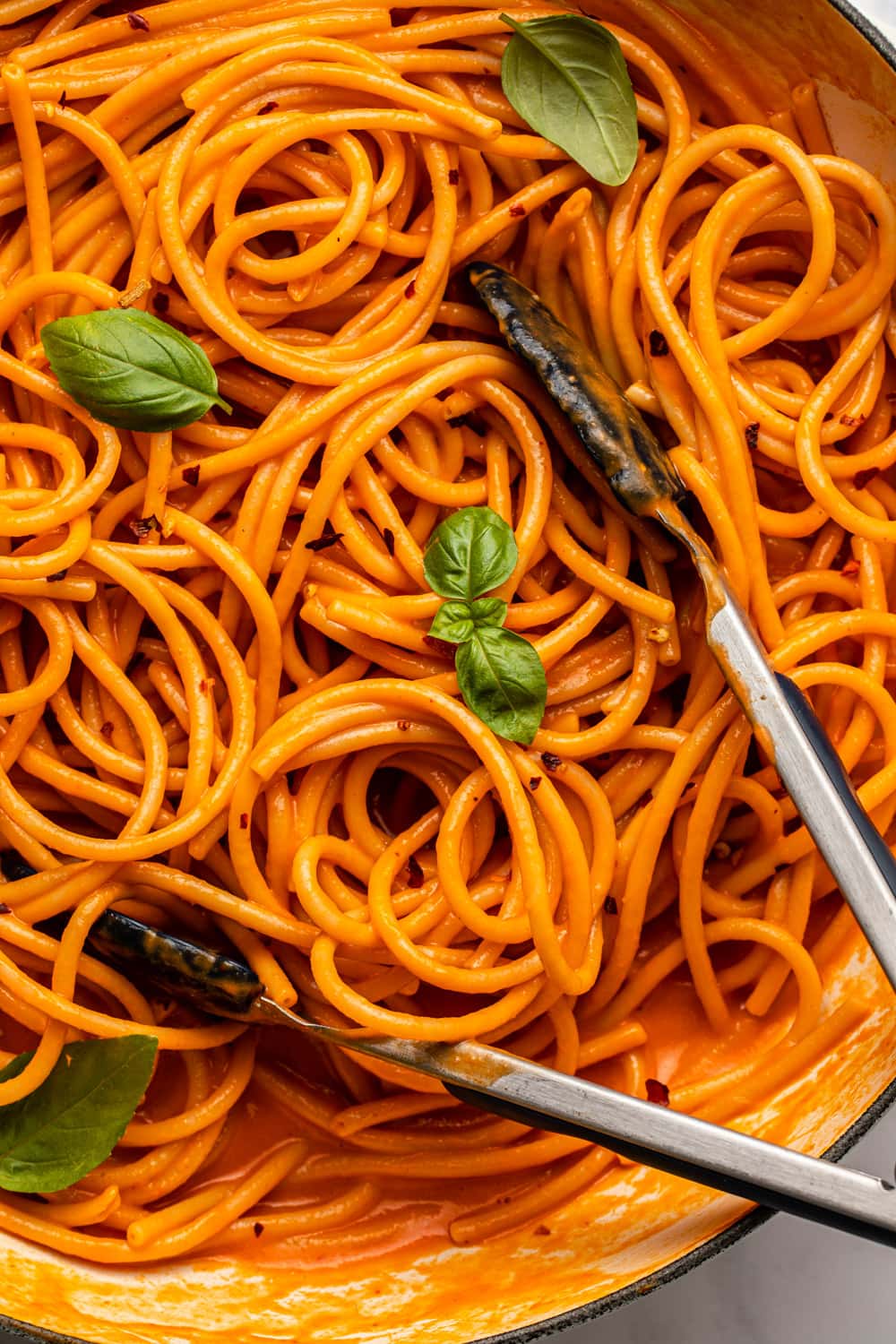
Serve each bowl of roasted red pepper pasta with fresh basil leaves and red pepper flakes on top to help each bite pop. A sprinkle of shredded vegan parmesan cheese on top would be divine, too.
This pasta recipe is perfect for a quick and simple yet flavorful weeknight dinner. Serve it with vegan garlic bread on the side, as well as an eye-catching salad, like this Everything Bagel Panzanella Salad or this refreshing Tomato Cucumber Basil Salad.
If you’re looking for more tomato-free vegan pasta recipes, you’ll also love this Beet Pasta with Walnuts, this Triple Garlic Pasta, this Vegan Buffalo Ranch Pasta, and this Vegan Lemon Ricotta Pasta!
How to Store Red Pepper Pasta
The cooled leftover pasta will keep for up to 5 days when stored in an airtight container in the fridge. The red pepper sauce can also be frozen separately from the pasta for up to 2 months.
To freeze, pour the blended roasted red pepper sauce into a freezer-safe container. Let it thaw in the fridge overnight before reheating it in a large pot or saucepan and tossing it with the pasta (continue from step 3 in the recipe directions).
I recommend reheating the leftover sauce-covered pasta in the microwave until it’s warmed through. Add a splash of water or broth as needed to make the consistency creamy again.
Substitutions and Variations
- Gluten-Free Option: Make this with your favorite gluten-free pasta noodles. The red pepper sauce is naturally gluten-free.
- Coconut Milk Substitute: You can swap the coconut milk with another vegan heavy cream substitute, like cashew cream, or a full-fat plant milk, like soy milk or oat milk. I don’t recommend using almond milk because it’s too thin.
- Protein Boost: Use bean or legume-based pasta instead, or serve this dish with my Crispy Tofu or Baked Tempeh on top to make it more filling.
- Optional Flavor Boosters: You can stir nutritional yeast, vegan parmesan cheese, Italian seasoning, black pepper, or smoked paprika into the pasta at the end. Add a little at a time, taste the pasta, and adjust the flavors as needed.
Recipe FAQs
These two pasta sauces are both made with roasted red peppers but they aren’t the same. Romesco sauce is made with tomatoes, almonds, and smoky spices, and roasted pepper sauce is creamier and tomato-free to highlight the flavors of the peppers.
Blend the peppers into homemade pesto, make Romesco Sauce, layer them into a roasted veggie sandwich, or chop them up and add them to a pasta salad, quinoa salad, or homemade pizza.
I don’t recommend it. Raw red bell peppers have a very different flavor profile and texture compared to roasted peppers and will cause the flavor in this sauce to fall flat.
Enjoy! If you make this recipe and decide to share it on Facebook or Instagram, don’t forget to tag me @FromMyBowl + #FromMyBowl! I would also love it if you could leave a comment below with a recipe rating! Thank you for the support 😊
Roasted Red Pepper Pasta
Ingredients
- 8 ounces pasta regular or gluten-free
- 8.5 ounces
roasted red peppers * drained and rinsed if using canned - 3-5 cloves garlic
- 1 cup full-fat coconut milk
- 1/2 cup vegetable broth homemade or store-bought
- 2 teaspoons cornstarch or arrowroot powder
- 1/4 teaspoon red chili flakes plus more for serving (optional)
- 1/2 teaspoon kosher salt
- Fresh basil for serving (optional)
Instructions
- Cook the Pasta: Bring a large pot of salted water to a boil and cook the pasta until al dente, according to the package instructions. Drain the pasta once cooked, but do not rinse.
- Blend the Sauce: Add the peppers, garlic, coconut milk, vegetable broth, red chili flakes, and salt to the blender. Blend on high for 45 to 60 seconds, until the sauce is smooth and creamy
- Simmer: Pour the sauce into a large pot or saucepan over medium heat. Bring the sauce to a simmer and cook for 5 to 7 minutes, stirring frequently, until bubbly and thickened. Add the cooked pasta to the pot, then use a spoon or tongs to mix everything together, adding more salt to taste if necessary. If the sauce appears to runny, allow the pasta to sit for an additional 3 to 5 minutes to absorb more of it.
- Serve: Transfer the pasta into serving bowls, then top with fresh basil and more chili flakes or as desired. Serve warm; store leftovers in the refrigerator for up to 5 days.
Recipe Notes
- Roasted Red Peppers: You can use homemade or store-bought peppers for this recipe. If you go with store-bought, I recommend purchasing a 12 ounce (340 g) jar. The jar weight includes the liquid that holds the peppers, which we will not use for this recipe.
- Gluten-Free: Use gluten-free pasta to make this recipe gluten-free



I make this sauce recipe at least 1-2x a week because I’m obsessed with the flavor!! I actually enjoy not only topping the pasta with fresh basil, but I actually love blending basil in the sauce. I just bought your cookbook yesterday at Barnes & Noble. I am so excited to support you and try some of your other recipes. 🙂
So happy you love it! Thank you for the support 🙂
So tasty! And super easy to make!
Surprisingly delicate and floral with a hint of smokeyness! This is a fantastic recipe.
Thank you so much, Carolyn!
So so tasty! Even tasted good cold the next day. Will be making this a lot!
Thanks for the review, Morgan!
Got a bit confused by the cornstarch (which is in the ingredients list but not in the directions)! But damn, this turned out DELICIOUS and is going into my regular rotation for sure. Thank you, Caitlin!
Glad it worked out. Thank you Emily!
I assume you add cornstarch in with everything else in the blender?
The cornstarch is mentioned in the ingredients but is not utilized in the recipe instructions. It’s included in the ingredient list as a potential thickening agent for the sauce.
If you choose to use the cornstarch to thicken the sauce, you can do so by following these steps:
In a small bowl, mix the cornstarch with a couple of tablespoons of water to create a slurry.
When the sauce is simmering in the pot (Step 3), you can add the cornstarch slurry to the sauce.
Stir well to combine, and continue to simmer for a few more minutes until the sauce has reached your desired thickness.
Adding cornstarch can help thicken the sauce if needed, but if you find the sauce is already thick enough to your liking, you can omit it.
So easy to make. Very tasty. Also recommend Simply Delicious Vegan book.
Thank you so much, Tina!
This recipe is so EASY and absolutely delicious!! 🙂 I added some broccoli pieces to it because I always am trying to incorporate more veggies! Thank you so much for sharing this recipe!! I love your blog!!
Thanks so much for making it! And glad you’re enjoying the blog!
Hey team, what is the vegie or mushroom boullion that I see Caitlin spooning into recipes? Brand name? Thank you!
More than likely it would be the homemade recipe! Great way to reduce waste from compost!
Excellent Recipe!
Thank you!
Looks fantastic! I’m just a little confused about the cornstarch. You mention it in the ingredients but nowhere else. Is it ment to be used somewhere?
The cornstarch is mentioned in the ingredients but is not utilized in the recipe instructions. It’s included in the ingredient list as a potential thickening agent for the sauce.
If you choose to use the cornstarch to thicken the sauce, you can do so by following these steps:
In a small bowl, mix the cornstarch with a couple of tablespoons of water to create a slurry.
When the sauce is simmering in the pot (Step 3), you can add the cornstarch slurry to the sauce.
Stir well to combine, and continue to simmer for a few more minutes until the sauce has reached your desired thickness.
Adding cornstarch can help thicken the sauce if needed, but if you find the sauce is already thick enough to your liking, you can omit it.